
informational 5 min read
Coronations at Westminster Abbey: Why Monarchs Are Crowned Here
Updated October 27, 2026
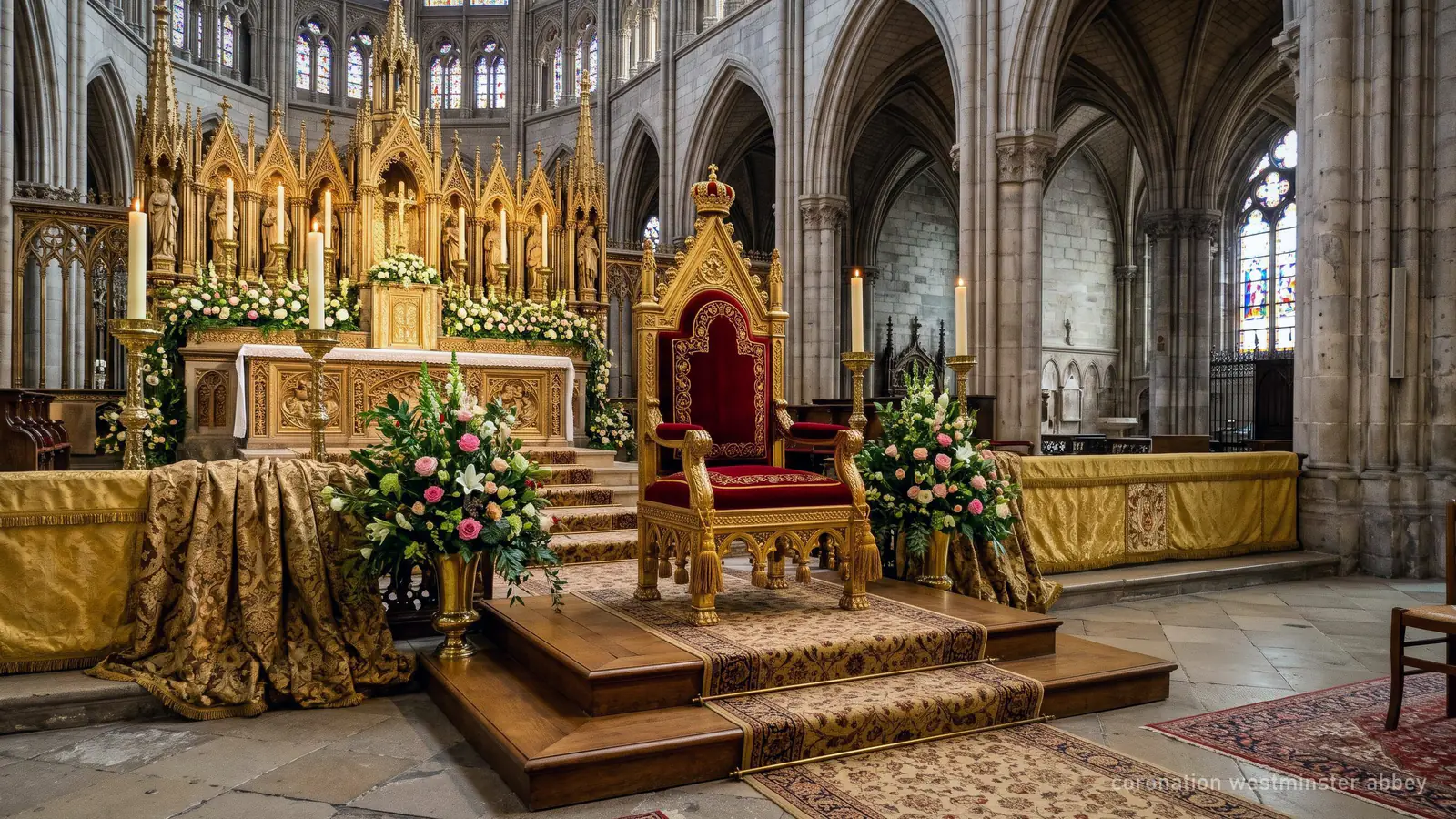
Short answer: Westminster Abbey has been the coronation church since William the Conqueror was crowned there on Christmas Day 1066. Every coronation since has taken place in the Abbey, and King Charles III, crowned on 6 May 2023, was the 40th reigning monarch crowned there. The monarch is crowned seated in the Coronation Chair, in front of the high altar, on the 13th-century Cosmati pavement.
Every coronation since 1066
The tradition starts with a claim to legitimacy. Edward the Confessor’s new church was consecrated on 28 December 1065, and he died days later. William the Conqueror was crowned in it on 25 December 1066, the first documented coronation at Westminster. The Abbey suggests the church may have been chosen to present William as Edward’s rightful successor.
Since then the Abbey has been, in its own words, “Britain’s coronation church”. Some milestones:
- 1274: Edward I became the first king crowned in the present Gothic church.
- 1308: the Coronation Chair was first used, by the Abbey’s dating.
- 1689: William III and Mary II, the only joint monarchs crowned, shared the ceremony, and a second chair was made for Mary.
- 2023: King Charles III, the 40th reigning monarch crowned here.
Two monarchs were never crowned: Edward V, presumed murdered in the Tower of London before his coronation, and Edward VIII, who abdicated 11 months after succeeding his father, before the date set for his.
The ceremony and the places in the church
Since the late 14th century, coronations have broadly followed the order of service in the Liber Regalis, the Abbey’s illuminated Latin manuscript. The Abbey lists the stages in this order:
- Preparation: the regalia procession and consecration of the oil.
- Entry into the church.
- Recognition: the sovereign is shown to the people on all sides.
- Oath: the Archbishop asks three questions, and the sovereign takes the oath at the altar.
- Presentation of the Holy Bible.
- Anointing: the sovereign sits in the Coronation Chair, under a canopy.
- Investiture: the sovereign receives robes and regalia, including the Orb, the Sceptre and the Rod.
- Crowning and Homage: the Archbishop of Canterbury places St Edward’s Crown on the sovereign’s head; the sovereign moves to the throne, and princes and peers pay homage.
- Recess: the procession out.
The key places are close together. The Coronation Chair is moved from its chapel to the centre of the church, in front of the high altar, and stands on the Cosmati pavement, the mosaic floor laid in 1268. Read more in the Coronation Chair and the Cosmati pavement.
Elizabeth II in 1953
Queen Elizabeth II was crowned on 2 June 1953. It was the first time the ceremony in Westminster Abbey was televised, and the Abbey notes that millions around the world watched. It was the last coronation until her son’s, in 2023.
She had a long link with the Abbey. She was married there on 20 November 1947, and her state funeral was held there on 19 September 2022, before her burial at Windsor. See royal weddings and royal funerals.
Charles III in 2023
King Charles III and Queen Camilla were crowned on Saturday 6 May 2023. The Abbey gave the service the theme “Called to Serve”.
- The Archbishop of Canterbury, Justin Welby, conducted the service.
- About 2,200 guests from 203 countries were invited.
- The King was seated in the Coronation Chair for the anointing, investiture and crowning, with the Stone of Scone brought back from Scotland and reunited with the chair for the day.
- A screen hid the King from view during the anointing.
- Queen Camilla was crowned with Queen Mary’s Crown.
- The Choir of Westminster Abbey sang at the service.
Afterwards Queen Camilla’s coronation bouquet was laid on the grave of the Unknown Warrior, a custom usually followed by royal brides.
What you can see of it today
Much of the coronation story is on the standard visitor route:
- The Coronation Chair, empty behind glass in St George’s Chapel, off the nave.
- The Cosmati pavement and the high altar, where the crowning takes place.
- The Liber Regalis, on show in the Queen’s Diamond Jubilee Galleries high in the triforium. The Galleries need a separate £5 ticket bought with your Abbey ticket, and no photos are allowed there.
A standard Westminster Abbey entrance ticket ($43) covers the Chair and the pavement. If you want the Galleries and a guide in one booking, the VIP Abbey and Galleries tour ($179) is the only listing we sell that includes Galleries tickets. Compare all options on our tours page.
Check prices & dates
Book your tickets in advance: popular time slots sell out.
Book Westminster Abbey Tickets
From$43per person
Check availability- Free cancellation up to 24h
- Reserve now, pay later
- Multimedia guide or live guide included
Frequently asked questions
How many monarchs have been crowned at Westminster Abbey?
King Charles III was the 40th reigning monarch crowned there. Because William III and Mary II were crowned together in 1689, the Abbey counts 39 coronations of reigning monarchs.
Which monarchs were never crowned?
Edward V, presumed murdered in the Tower of London before his coronation, and Edward VIII, who abdicated before the date set for his.
Was Elizabeth II's coronation televised?
Yes. On 2 June 1953 the ceremony in Westminster Abbey was televised for the first time.
Can you see the coronation spot in Westminster Abbey?
Yes. The crowning takes place on the Cosmati pavement in front of the high altar, and the Coronation Chair is on show in St George's Chapel, both on the standard route.
Sources