
informational 5 min read
The Cosmati Pavement at Westminster Abbey
Updated October 27, 2026
Short answer: the Cosmati pavement is the 13th-century mosaic floor in front of the High Altar of Westminster Abbey. Henry III ordered it, and it was laid in 1268 by craftsmen from Rome led by Odoricus. Its inscription predicts the end of the world, it was hidden under carpet from the 1870s until a restoration finished in 2010, and it is the spot where monarchs are crowned.
What it is and who made it
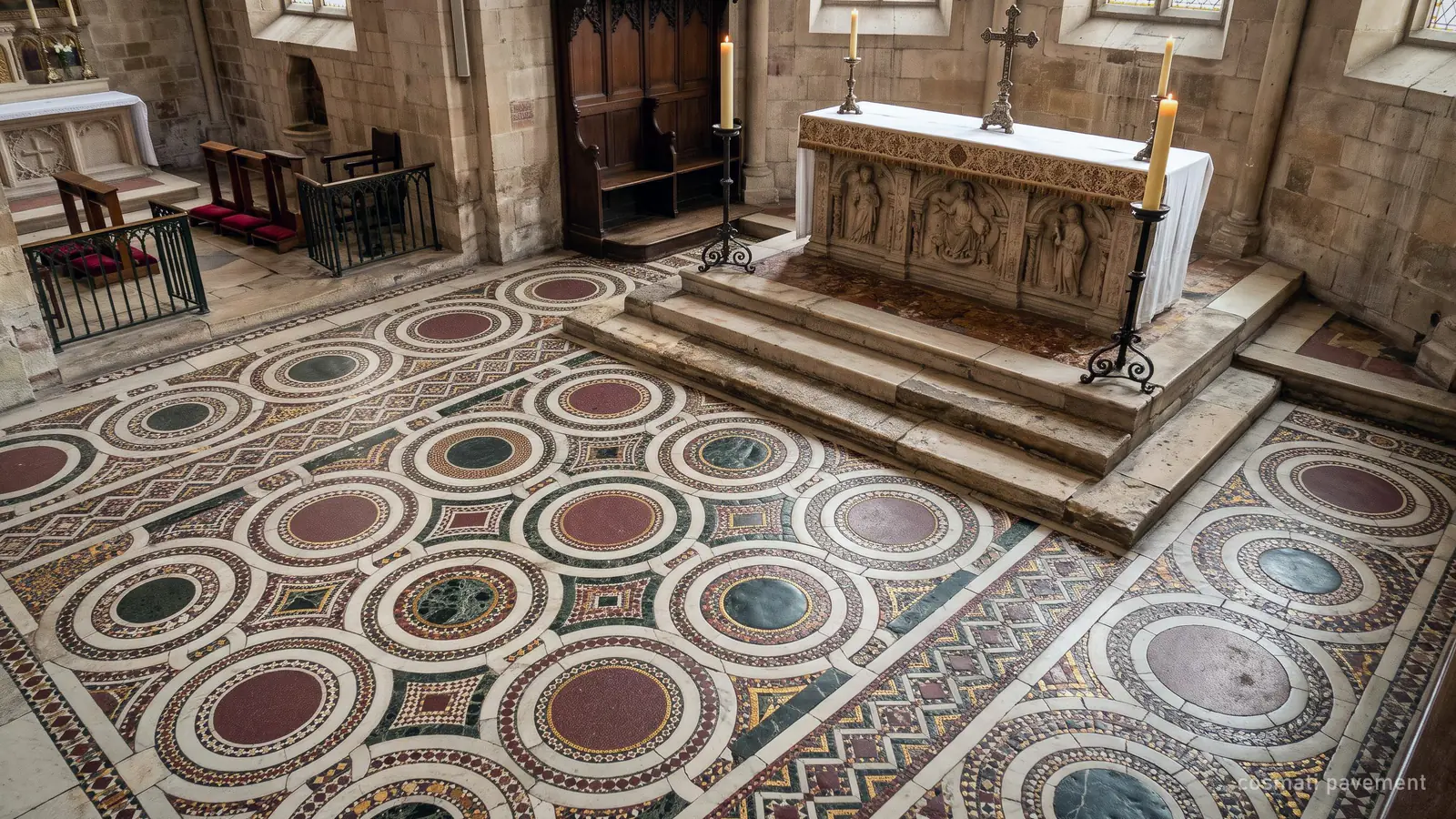
The pavement is a square of patterned stone and glass, set into the floor of the sanctuary before the High Altar. The Abbey says it “was laid down in 1268 by order of Henry III”, who had begun rebuilding the Abbey in the Gothic style in 1245.
The workmen came from Rome, led by a man called Odoricus. The technique is opus sectile, Latin for “cut work”: shaped pieces of stone are cut and fitted together. The style takes its name from the Cosmati, a family of Italian craftsmen. The Abbey calls the pavement “the best surviving example outside Italy” of Cosmati work.
The key facts, from the Abbey:
| Date | 1268 |
| Size | 24 ft 10 in (7 m 58 cm) square, set out in Roman feet |
| Centre | An onyx roundel |
| Stones | Purple porphyry, green serpentine, yellow limestone |
| Glass | Opaque red, turquoise, cobalt blue and bluish white |
| Bed | Dark Purbeck marble |
It is also the coronation floor. The Abbey says it has been “the place of coronations for over 700 years”, and the Coronation Chair stood on it on 6 May 2023. Read more in our guide to Westminster Abbey coronations.
The inscription that predicts the end of the world
The pavement carried three inscriptions in brass letters. They are now damaged, but the chronicler John Flete copied them in the 15th century, so the text survives.
One gives the date as a puzzle. It says the stones were laid in the year “1212 plus 60 minus 4”, which is 1268, by Henry III, the city, Odoricus and the abbot. The abbot was Richard de Ware, and he is buried beneath the pavement.
Another predicts how long the world will last: 19,683 years. It gets there by a chain of lifespans, each three times the one before:
- A hedge lives 3 years.
- A dog lives 9 years.
- A horse lives 27 years.
- A man lives 81 years.
- And so on, tripling up to the world itself.
The Abbey points out a second layer in the date. 1212 plus 60 gives 1272, the year Henry III died, and 60 minus 4 gives 56, the length of his reign. That suggests the inscriptions were added shortly after his death.
The 2010 restoration
The pavement spent well over a century out of sight. The Abbey says it was under carpet from the 1870s until a two-year conservation project finished in 2010; Wikipedia dates the start of that programme to 2008. Special carpet also covered it at earlier coronations, including those of George VI in 1937 and Elizabeth II in 1953.
The work cleaned the pavement thoroughly and conserved and consolidated it. The Dean of Westminster re-dedicated it at a service on 21 May 2010.
When you can see it uncovered
Today the pavement is on view, but you look rather than walk. The Abbey says visitors usually see it from the foot of the High Altar steps, with the area roped off. On the Abbey’s suggested route, you reach it after the quire, on the way to the High Altar.
The one exception so far followed the 2023 coronation. From 15 May to 29 July 2023, the Abbey ran barefoot tours on selected days: groups of ten, shoes off to protect the surface, for £15 plus Abbey entry. The Abbey said it was the first time in living memory that visitors had been invited to walk on it. Watch the Abbey’s events listings in case such tours return.
The pavement is included in a normal visit: £32 for adults on the Abbey’s site (about $43). A guide helps here, because the patterns are easy to miss from the steps. A guided tour of Westminster Abbey, from $100, adds a licensed guide and the priority group entrance. For the building around it, see Westminster Abbey architecture.
Check prices & dates
Book your tickets in advance: popular time slots sell out.
Book Westminster Abbey Tickets
From$43per person
Check availability- Free cancellation up to 24h
- Reserve now, pay later
- Multimedia guide or live guide included
Frequently asked questions
How old is the Cosmati pavement?
It was laid in 1268 on the orders of Henry III, so it is more than 750 years old. The Abbey says workmen came from Rome, led by a man called Odoricus.
Can you walk on the Cosmati pavement?
Not normally. The Abbey says the pavement is usually roped off and seen from the foot of the High Altar steps. In 2023, after the coronation, it ran small barefoot tours of ten people on selected days.
Why is the Cosmati pavement important?
The Abbey calls it the best surviving example of Cosmati mosaic work outside Italy, and it is where English monarchs are crowned: the Abbey says it has been the place of coronations for over 700 years.
Was the Cosmati pavement covered at the coronation of Elizabeth II?
Yes. The Abbey says special carpet covered it at earlier coronations, including Elizabeth II's in 1953 and George VI's in 1937. It was on display for the coronation of 6 May 2023.
Sources